[Portfolio] [CV] [CV-PDF(English)]
2025.12
I am a Japanese artist working with embroidery and video, using “sewing” as my central theme. My practice approaches the sensory dimensions of sewing and is grounded in participation and observation within communities, including my own family. I was born in a rural area of Tokushima, where there were few shops and people lived by “making” and “repairing” rather than buying. Many masterful sewists lived there, including my grandmother. She lost her eyesight early, and her skills were never passed down to me. I moved to a city in my childhood due to my father’s work. Only then did I realize that their techniques were part of a cultural heritage worthy of global recognition, and that, without anyone left to inherit them, they were disappearing. In Japan, the rapid aging of society and the shortage of caregivers mean not only the loss of skills but also the erosion of bodily knowledge and relational memory.
Japan’s severe aging crisis has created a shortage of caregivers. Yet caregiving places both the giver and the receiver in a tense, burdensome position. I wanted to create work that visualizes and heals this psychological strain. The starting point was my relationship with my mother-in-law. She is partially paralyzed and needs assistance when walking. One day, I asked her to help with a simple part of my embroidery. Our conversation flowed, and I sensed her tension easing. Only then did I discover that she, like my grandmother, possessed highly skilled sewing techniques. She too had been born in a rural region—Aomori in northern Japan. I realized that respecting someone’s skill, asking for help, and caring for one another are profoundly natural acts. These moments became openings through which invisible forms of perception emerged.
Sewing is no longer confined to its historical frame as a “woman’s craft.” It has become an open technique through which anyone can repair themselves, care for others, and regenerate what has been broken into new forms. Through these experiences, I have come to regard sewing as an act that makes visible the tension and recovery inherent in care. It is not merely a domestic skill, but a shared method for restoring, rebuilding, and reshaping ourselves.
私は、縫うことをテーマに、刺繍・ビデオ作品を作る日本のアーティストです。縫うことにまつわる感覚にアプローチしており、そのプロセスはコミュニティ(家族も含む)への参加と観察に基づいています。私は日本の徳島の片田舎で生まれ店の少なく「買う」よりも「作る」「直す」環境で育ちました。そのような田舎には私の祖母をはじめ、縫い物の名人がたくさんいました。祖母は早くから目を悪くし、私には技術は継承されませんでした。私は幼少期に父の仕事の都合で都会に引っ越しました。都会に出て初めて、彼女たちの技術が世界に誇るべき文化であり、継承する子どもがいないことで確実に失われつつあることに気づきました。日本社会で広がる少子高齢化とケアの不足は、技術だけでなく「からだの感覚」や「関係の記憶」が失われていく現実でもあります。
日本は少子高齢化が深刻でケアの担い手が足りていません。しかし、ケアはする側・される側が緊張関係におかれる、負担が重いものです。このような心的な負担を可視化し、癒す作品が作りたいと考えました。きっかけは、私の義母とのコミュニケーションです。彼女は半身不随で、歩くときに誰かのケアを必要とします。私がケアするとき、義母はぎこちなく、申し訳なさそうでした。私はそのぎこちなさが身体が固まって檻の中にいるように感じました。ある時、私の刺繍の簡易な作業を手伝ってもらいました。話もはずみ、緊張から解放されていくように感じました。そのとき、初めて、義母が私の祖母同様に、高い裁縫技術を持っていることを知りました。彼女も日本の青森という田舎生まれでした。技術にリスペクトを持つこと、手伝ってもらうこと、ケアしあうことはとても自然な行為だと気付きました。それらは、目に見えない感覚が開いていくきっかけなのだと感じました。
縫うことはもはや「女性の手仕事」という歴史的枠にとどまらず、誰もが自分を立て直し、ケアし、壊れたものを別の形へ再生させるための、多くの人に開かれた技法なのです。このような経験から、私は縫うことを「ケアの緊張と回復のプロセスを可視化する行為」として捉えるようになりました。縫うことはもはや「女性の手仕事」ではなく、誰にでも開かれた〈修復し、立て直し、変化するための技法〉です。
2025.11
Minami Kinto’s work begins by collecting old clothes, cloth, and things from the past. Her approach to working is based on collaborating with communities and watching what people do.
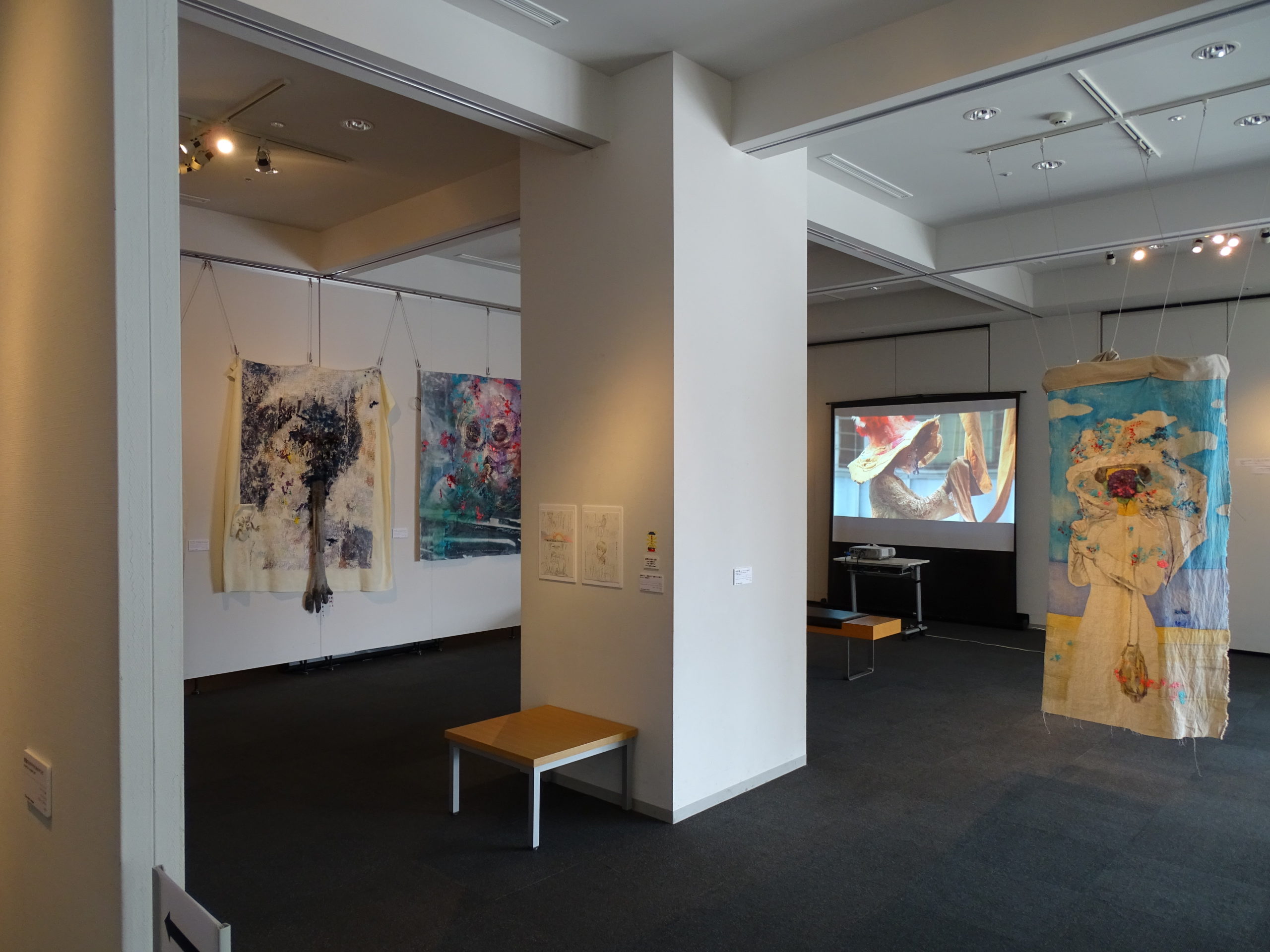
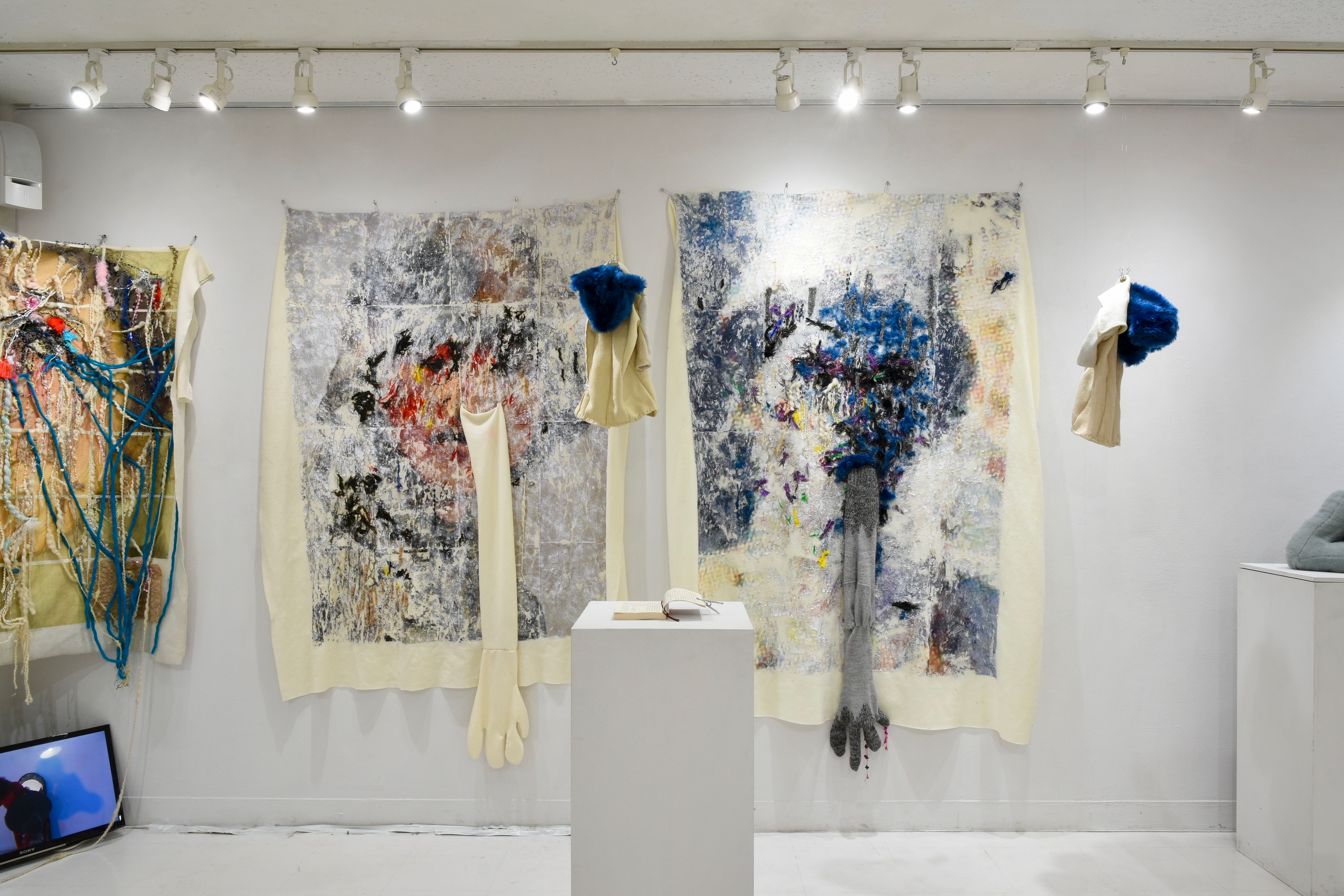
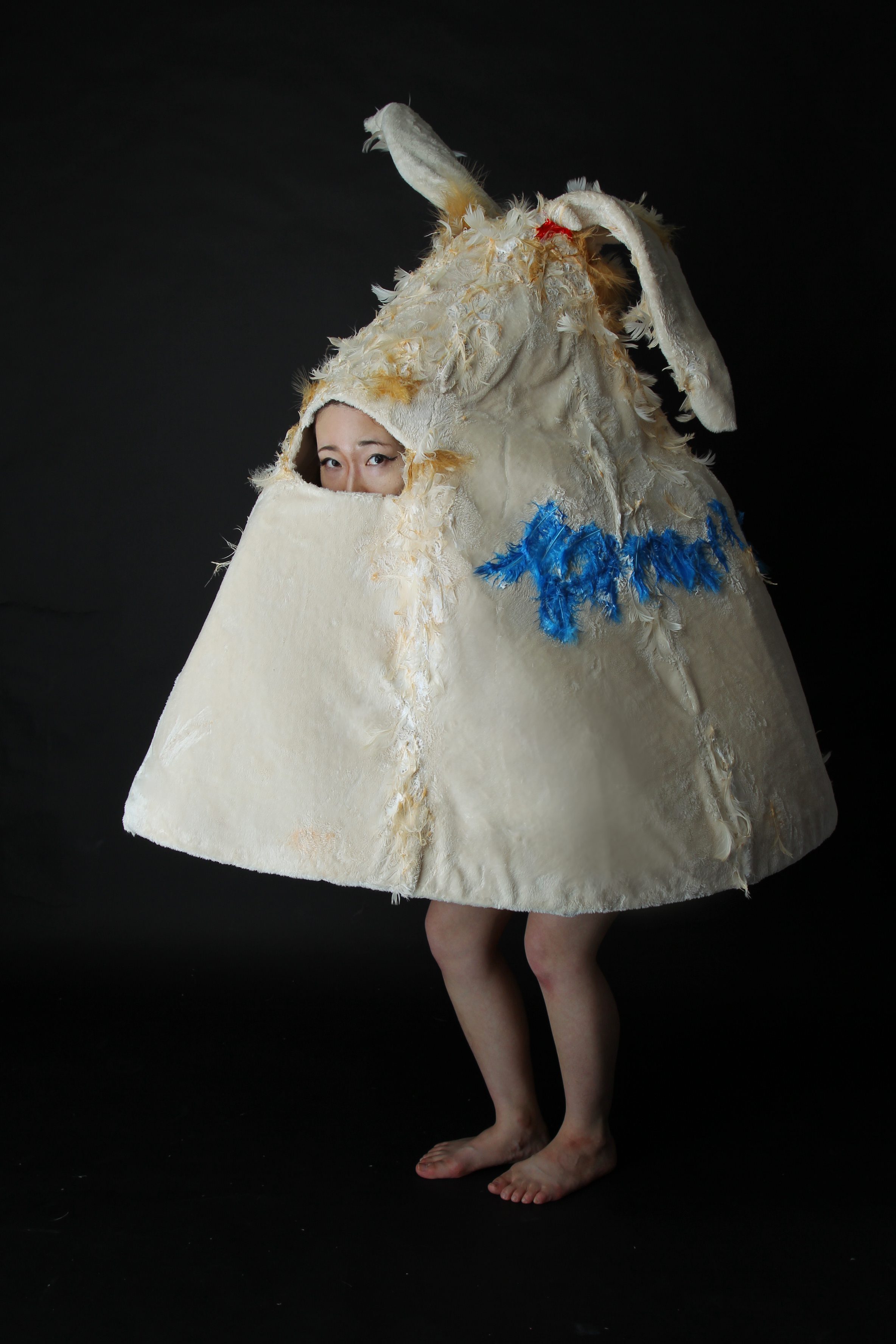
She was influenced by feminist art and theater that focus on sewing. She uses old cloth because it holds memories. Her style uses both careful traditional craft methods and strong, dynamic ways that come from theater costumes. She starts by sewing, and then draws theater scenes like they are tapestries.She also wears what she makes on her body to show her ideas. In Fukushima, she works with communities and shares small everyday stories and history. This work shows that sewing is deeply connected to women’s independence, to work that helps families, and to social roles that continue from one generation to the next.
It can quickly become something different. For her, the act of sewing is like changing social roles with her own hands. By understanding the past well and using it again, she learns how value changes. She makes new beauty. (171 words)
金藤みなみの作品は、捨てられた服や布・過去の物語や慣習を集めるところから始まる。そのアプローチは、コミュニティへの参加と観察に基づいている。
「縫う」ことを軸としたフェミニズムアートや舞台に影響を受け、追求する。古布を素材とするのは、それらは記憶を宿しているからだ。金藤の表現技法は、伝統的で繊細な工芸技術と舞台衣装に影響を受けたダイナミックなスタイルを両立させている。縫うことから始まり、演劇のワンシーンをタペストリーを描くように、あるいは自ら身に纏って表現される。さらに、福島ではコミュニティとともに共同制作しながら、日々の些細な出来事や歴史を共有することに成功している。この経験は、縫うことの実践が女性の自立、家計を支える労働、世代を超えた社会的役割と深く結びついていることを明らかにした。
縫う行為そのものが、金藤にとっては自分の手で社会的役割を組み換えていく行為だ。過去をよく知り、過去を再生することで、価値の変化を知り、新しい美しさを作る。
2025.10
Through sewing, I try to love the excluded person, the socially imposed roles, and myself who has internalized the role. Especially when I feel myself performing the social role of motherhood with concern for others’ eyes, I perceive myself as an excluded person. I use discarded clothes as my material because I feel they are like myself. They are fragments of someone’s life, waiting to be reborn. Through sewing, I can transform into various things. I can become something completely different in an instant. The act of sewing itself is, for me, an act of reconfiguring social roles with my own hands. To reborn, to recover, to transform. Rather than creating something new, I want to start by retelling something that has already been “lived.” By knowing the past deeply and rebirthing it, I want to understand shifts in value and depict new beauty.
When I consider the history of sewing, in late nineteenth-century Japan, female education was deemed unnecessary, yet sewing schools encouraged needlework to cultivate good wives and mothers. However, that skill also became a means to earn income, providing self-respect and a vehicle for women’s emotional expression. Across generations, sewing has been connected to independence and self-determination.(200 words)
私は、ソーイングを通して、排他された人や、社会的に押し付けられている役割、そして、それら を内面化している自分自身を愛そうとしています。特に、私自身が母親としての社会的役割を他人の目を気にして行っているなと感じる時、私は私自身を排他された人のようだと思います。古布を素材とするのは、それが私のように感じるからです。それは誰かの人生の一部だったもので、まるで再生することを待っているようです。縫うことで、さまざまなものに変身することができます。あっという間に違うものになれるのです。縫う行為そのものが、私にとっては自分の手で社会的役割を組み換えていく行為です。再生させ、回復させ、変身させます。新しいものを作るのではなく、すでに「生きた」ものを語り直すことから出発したい。過去をよく知り、過去を再生することで、価値の変化を知り、新しい美しさを描きたいと考えています。ソーイングの歴史を考えてみると、19世紀末の日本では、女子の教育は必要ないとされていましたが、裁縫学校では良き妻・母になることのための縫い物は奨励されていました。しかし、その技能は、稼ぐ手段として自尊心を与え、女性たちの感情の表現手段にもなっています。ソーイングは時代を超えて自立と結びついているのです。(534文字)
2025.8
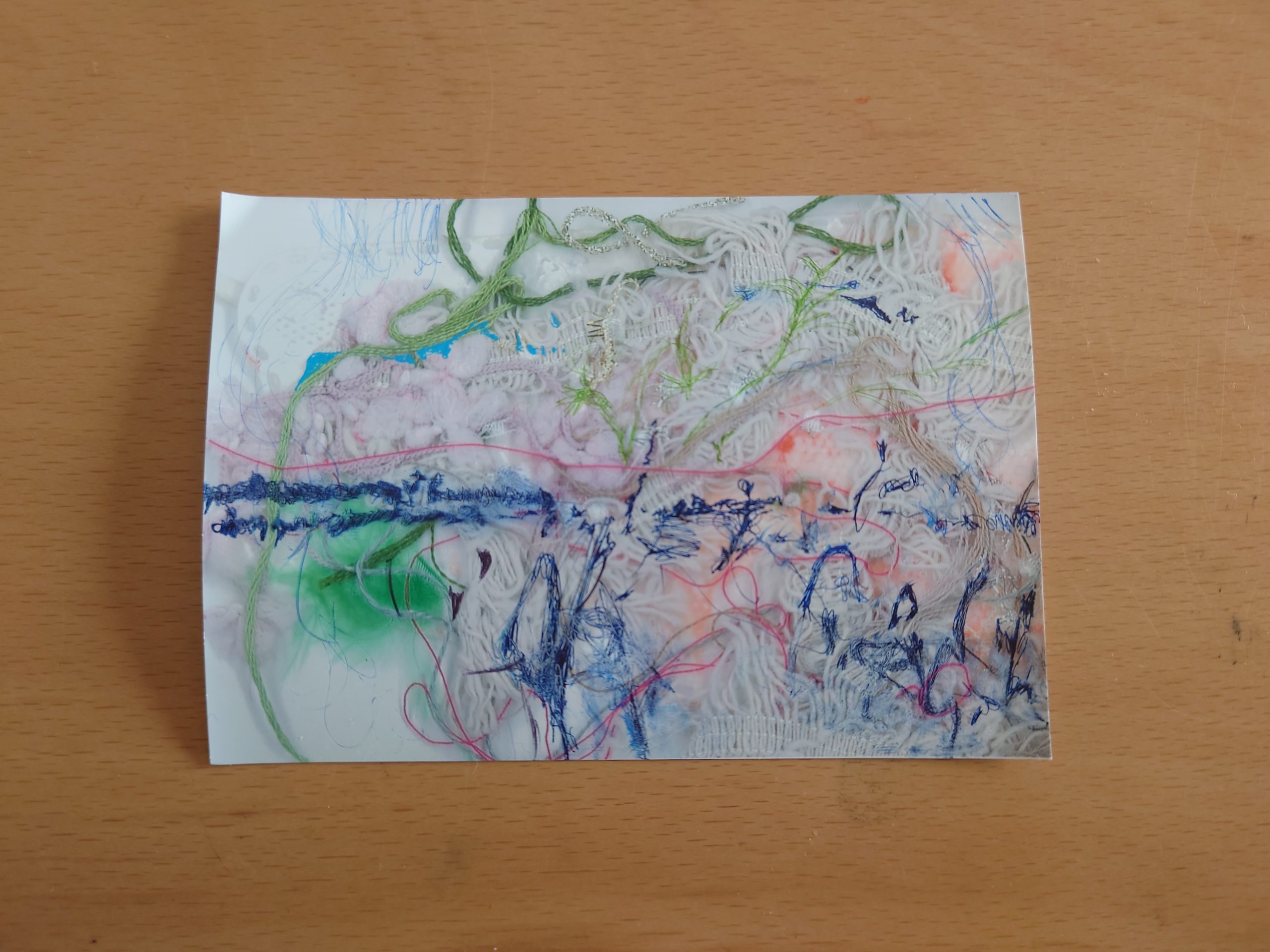
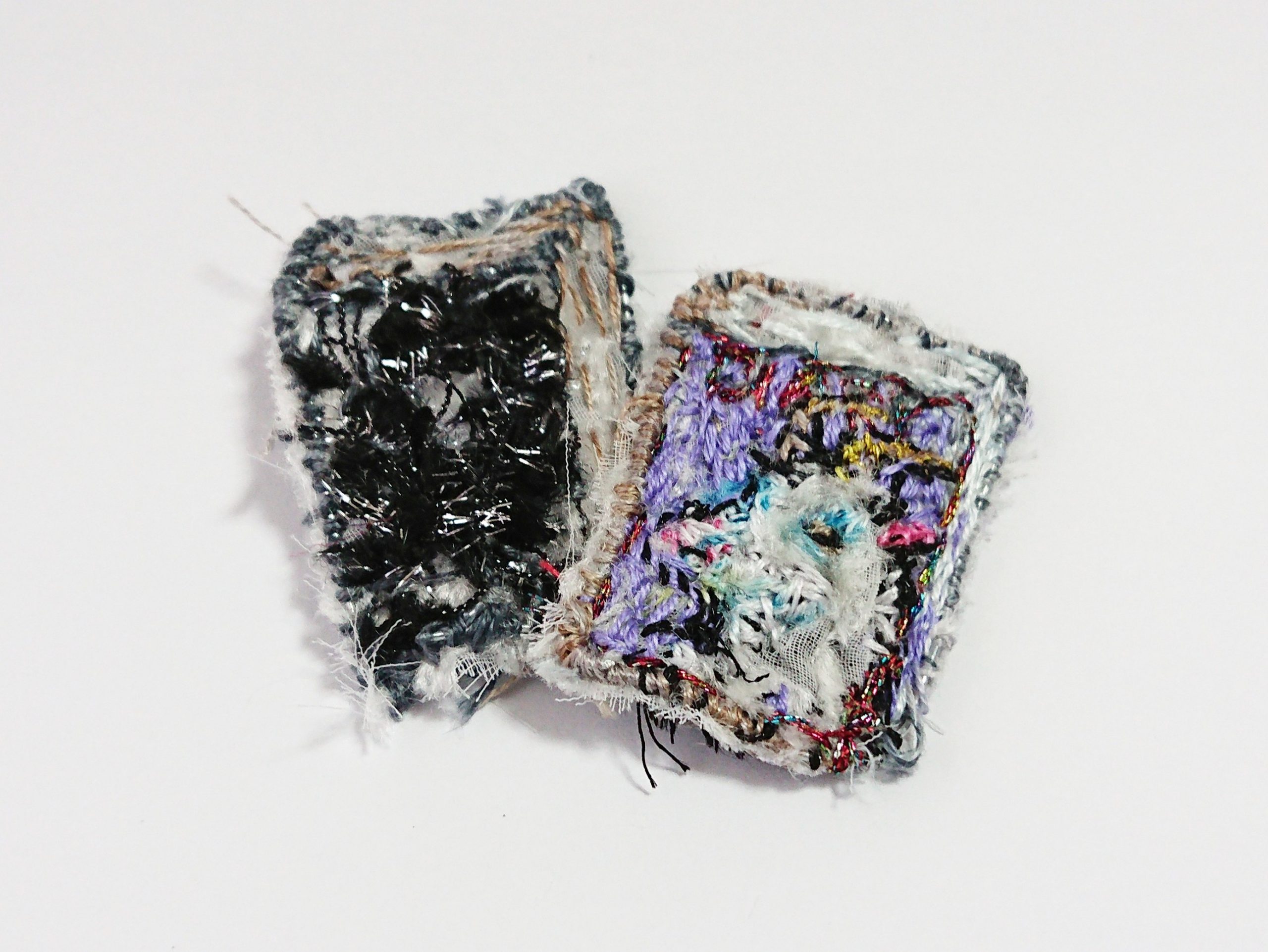
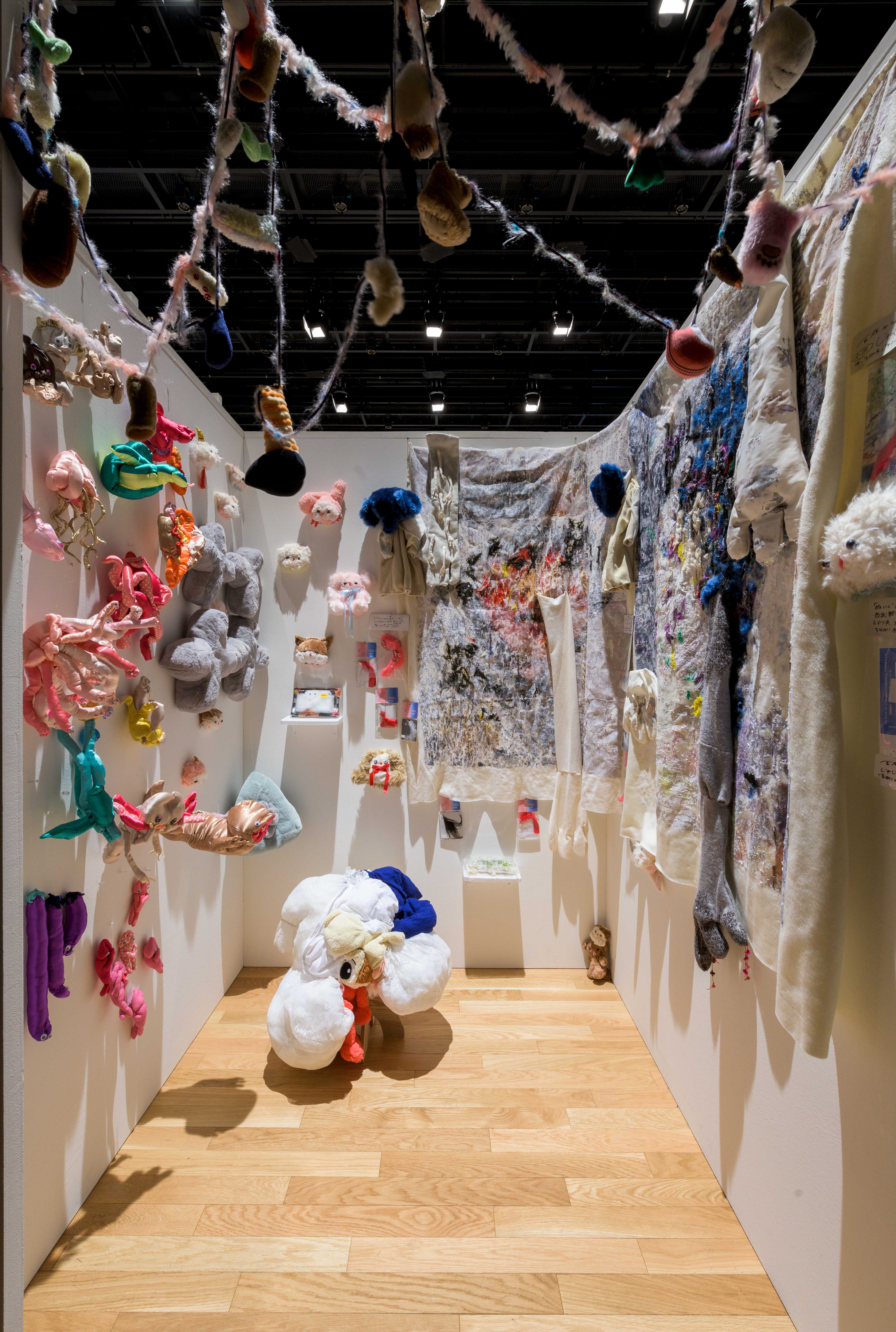
I am a visual artist who works with sewing. Works are created like patchwork by hand using discarded clothes, glittering threads, and beads as material. Through “sewing,” I seek to love those who have been wounded. For me, sewing is an act of regeneration, recovery, and transformation. I use old fabrics as materials because they were once part of someone’s life. Rather than creating something entirely new from scratch, I want to begin by retelling what has already “lived.” I seek to trace the past and regenerate it, discovering shifts in value and creating new beauty through this process. (99words)
私は「縫う」アーティストです。廃棄された衣服、きらめく糸、ビーズを素材に、手作業でパッチワークのように制作しています。私は、「縫う」ことを通して、傷ついた人を愛そうとしています。縫うことは私にとって、再生させ、回復させ、変身させる行為です。古布を素材とするのは、それが誰かの人生の一部だったものだからです。新しいものをゼロから作るのではなく、すでに「生きた」ものを語り直すことから出発したい。過去をなぞり、過去を再生することで、価値の変化を知り、新しい美しさを描きたいと考えています。(242文字)
2025.5
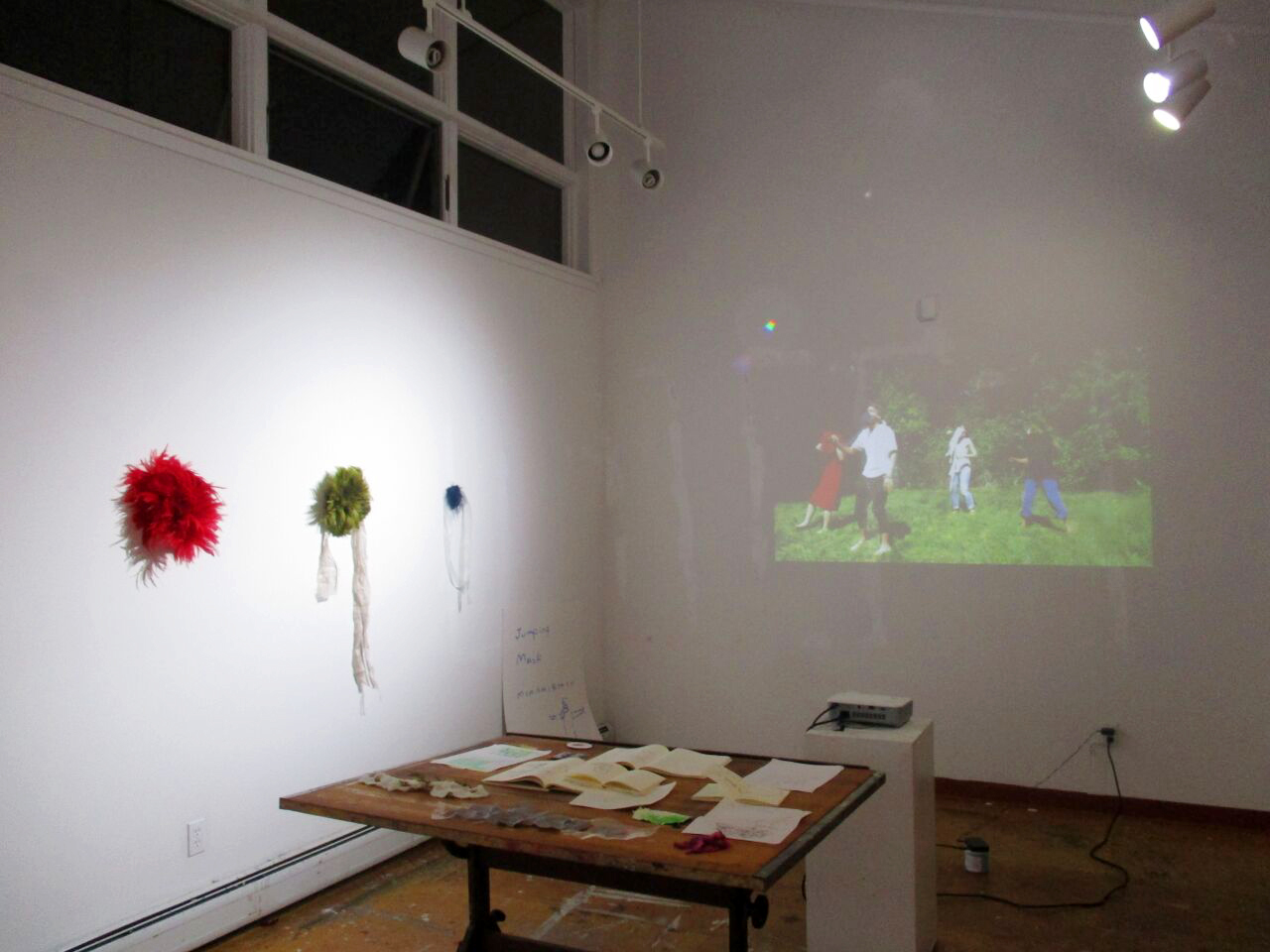
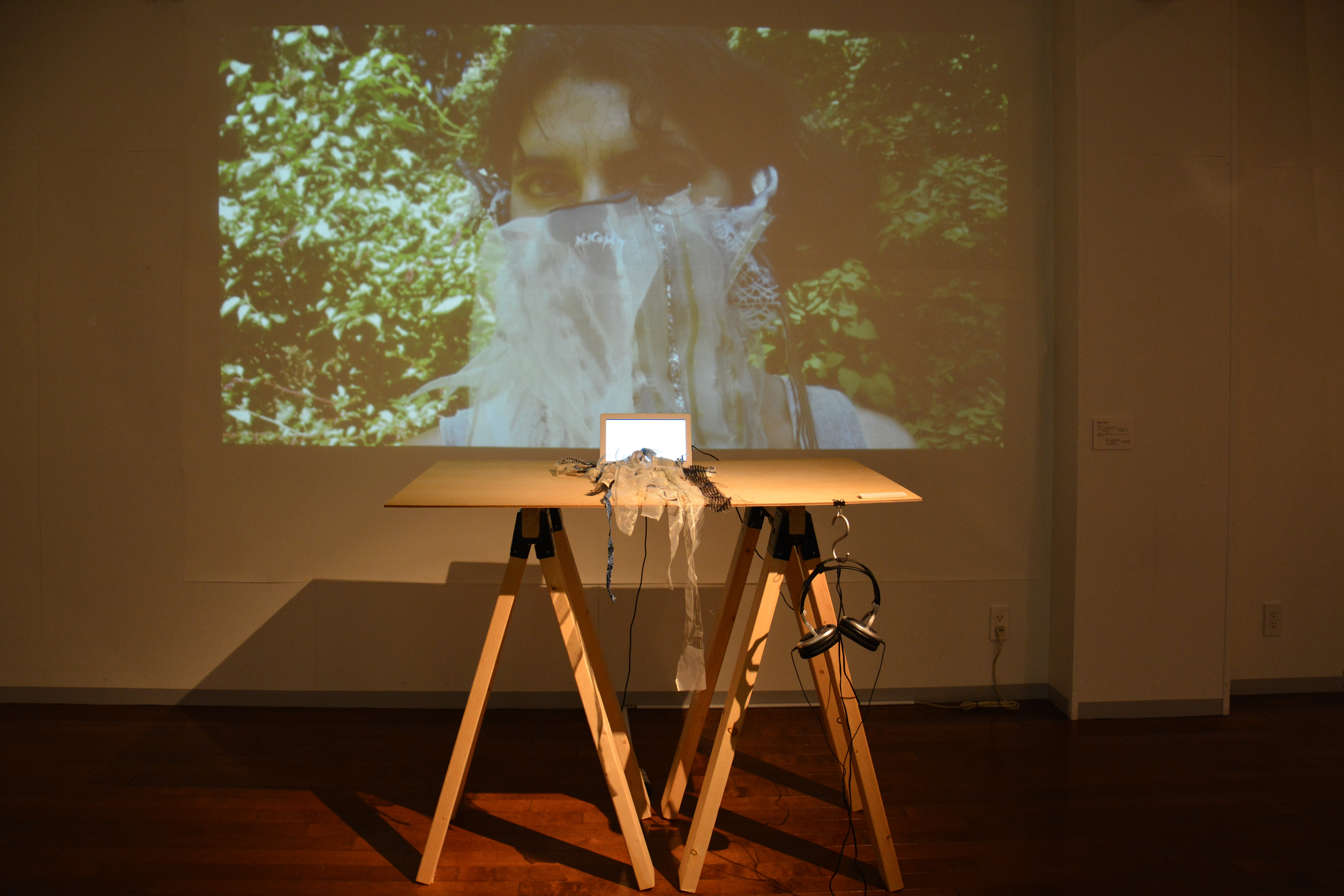
I am a visual artist who works with sewing. Works are created like patchwork by hand using discarded clothes, glittering threads, and beads as material. I would like to love those whom history has excluded and those who have been hurt. So I create work that praises the way such people live. Recently, I have been doing embroidery with storytellers and residents. This is a quiet care time to process collecting, gathering, and changing them. In the workshop, I can share folklore, personal stories, and petty grief. Sewing is the act of reconstructing social roles with my own hands. It heals me and tells me how to observe small things and magnify individual expressions.
2024
I am a visual artist who works with sewing.
My work explores the concept of how to love the stranger. The “stranger” is not limited to human beings but extends to stories, time periods, and societies. Sometimes, the stranger is myself and the role I play in society.
By disguising myself as the stranger, I believe I can come to understand the soul of the stranger. Clothes can be changed in the blink of an eye, but people often feel fear towards those who dress differently and comforted by those who dress the same.
From birth, people are wrapped in cloth, wear it throughout life, and are wrapped again at death. In Japan, for instance, small children wear clothes sewn with wishes for their good health.
Cloth, therefore, is not merely a material; it resembles the body, serving as a container for the spirit.
Therefore, I have been approaching sewing.
2023
時代や社会、他者との間にある関係性と可能性に対してアプローチするため、物語・職業・ファッション等の振る舞いをなぞりながら、意図的に置き換え、その振る舞い自体の違った意味へと誤配します。
パフォーマンスはその性質上、身体の交換不可能性を内在し強調しつつも、同時に「全く違う立場の役にあっという間に変身すること」が可能なものです。
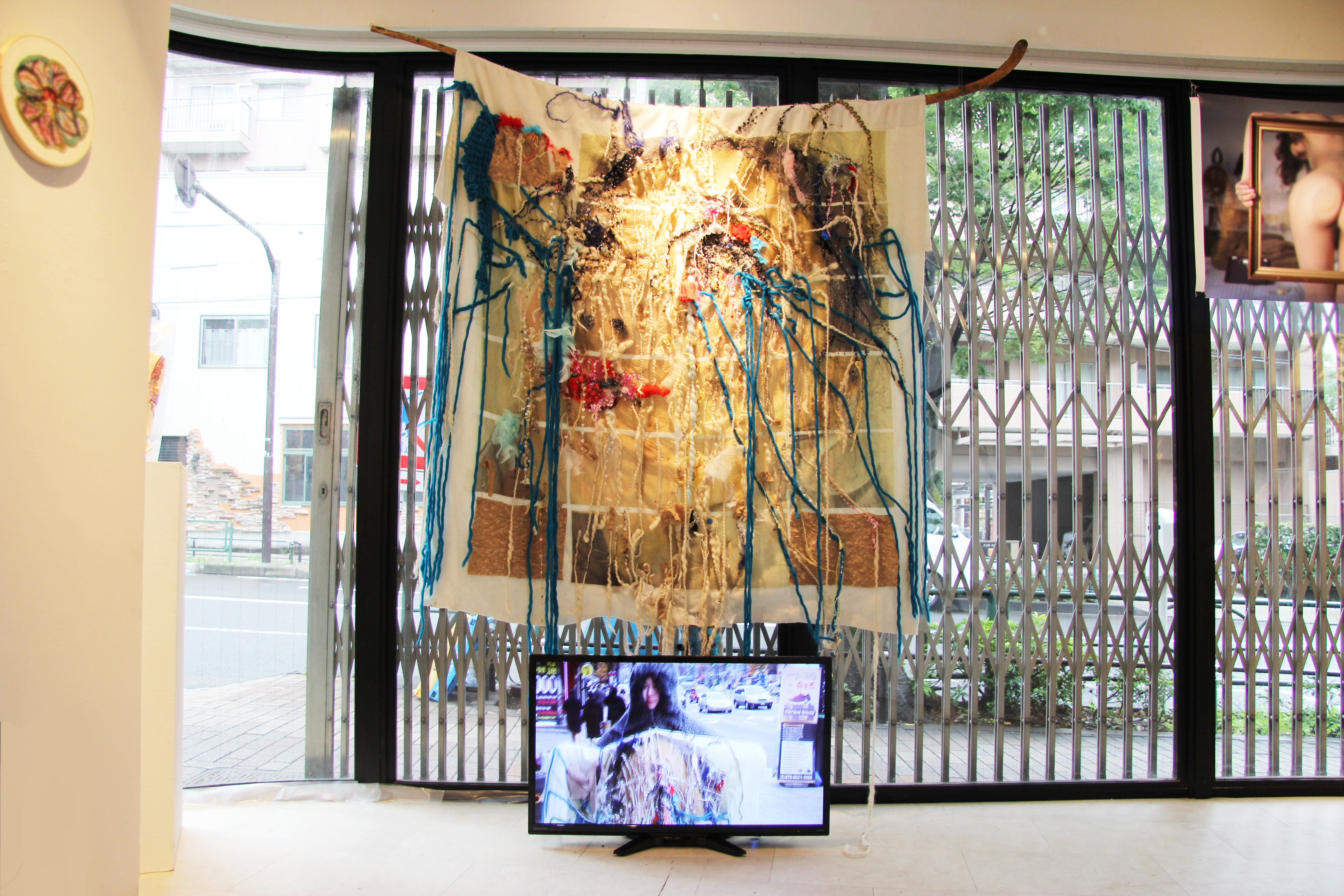
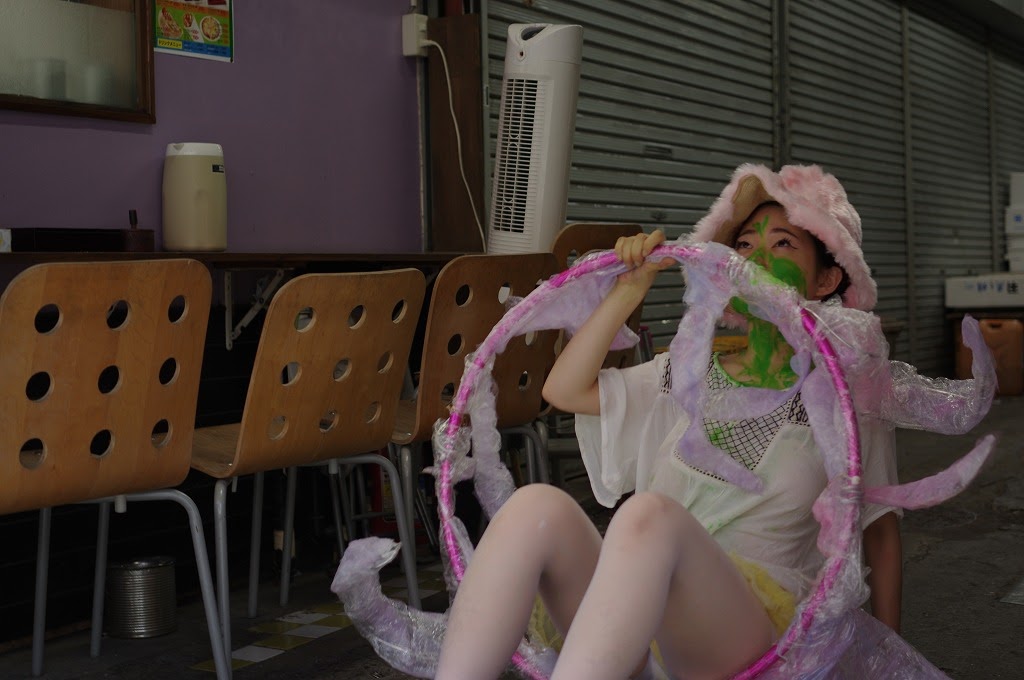
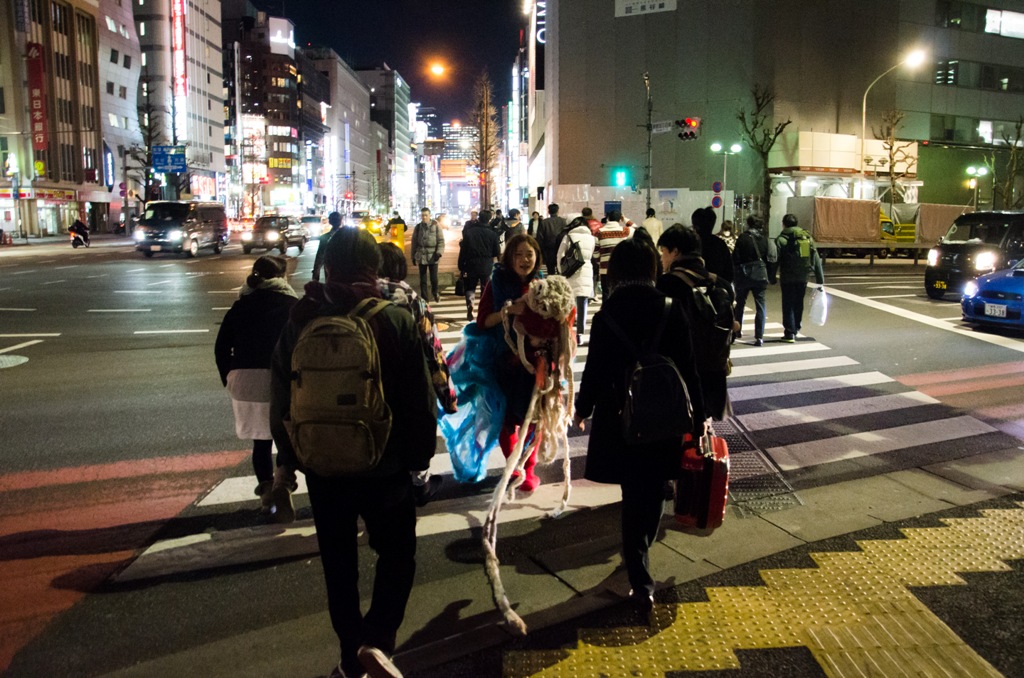
また、パフォーマンスは状況や鑑賞者との遭遇など偶然性が強く働く行為です。そのため常に他者と新たに関係を結んでいくことになります。このような立ち振舞いは、さまざまなタペストリーを縫い繋げる針のような作業であり、実際に針を使って縫い込んだ衣装を用いることがよくあります。
針は、二つの矛盾した表情を持っています。残酷な側面もあれば、地道な「針仕事(シャドウワーク)」の側面もあります。そのようなモチーフである針を使う事で、捨てられた物語の死のにおいと純愛にも似たエロスに関しても矛盾したまま表現することが出来ます。つまり、針はパフォーマンス中の身体そのものでもあります。
圧力を受ける立場は時代や社会によって変化します。針であることによって、平等というものの毒性についても自覚的でありたいです。平等を実現するためにつまはじきにされたものに目を凝らすということです。
大きな物語を語る際に轢き潰してきた、あらゆる解釈の可能性を引き出し、翻案し、共に踊ることによって、本当に平等について考え始めることができるように思うのです。
あらゆる関係性と可能性を探ろうとする私にとって、衣装やタペストリーを含むパフォーマンスはテーマの深淵に迫るために不可欠な活動なのです。
2021
川べりで靴紐がほどけ、結び直すとき、マスクがぽたりと落ちていることに気づいた。
口蹄疫のときも豚インフルエンザのときも、みんなマスクをつけることが暗黙のエチケットになっており、清潔さを強調していた。しかし、こんなに high demandなものが、用済みだとでもいうように打ち捨てられている。その事実がひどく私を動揺させ、惹き付ける。ビニールから取り出したばかりのマスクよりも、道に
打ち捨てられたマスクのしみに心が惹かれ、こちらにこそ魂の本質が宿っているように感じる自分を発見する。
今まで、ハプニングや刺繍・小説・ビデオインスタレーションなどを縫い合わせるように作品や展示を作ってきた。キャリアの初めが舞台衣装だったが、衣装そのものよりも、その端切れがどこへ行ってしまうのか、汚れやしみの方に興味があった。
物語の主線よりも、削がれた部分。
捨てられたもの、なくしたもののしみを手当てするように
または全然違う素材が生えてきて侵略するような
不思議で怖い想像力に抗えない。
ずっと変わらないクラシカルな昔話も慣習も構造も、編み込み縫い込むことで、スリリングな表情を見せる。そういったモノたちを解釈し学び批評する喜びが私を惹き付けるし、時代の要請によっていつでもアバンギャルドな顔を見せる。それらモノたちの背景にはいつも虐げられた人々が見え隠れする。私はずっと本当の意味で人権というものに興味がある。
2020 ザ・マスクウーマン
2020年7月14日の取材で考えたこと。
インタビュアーさんが信頼できる方だった。
緊張なく話せた。
「ザ・マスクウーメン」という個展のタイトルについて理由を質問され、ざっくばらんに話していたので、確かサム・スミスの話をしたと思う。 2019年、英出身シンガーのサム・スミスに関して、BBCが「Sam Smith changes pronouns to they/them ※」と報じた。一人称をthey にするという。 「Smith said they did not feel male or female, but “I flow somewhere in between”.」 と彼自身が6か月前に言っている。男性でも女性でもないと感じる人が、「they」という今まで使われていた言葉に新しい意味を与えるアクションに、私は感じるところがあった。 今回のマスクウー「メン」の、Menは、確かに「人々」という意味がある。「男性」を指す「メン」に、男性以外の性の人間が入るよう、新しく意味を与えられるとすれば、そもそも「ウーメン」自体にも、たとえ本来はその意味がなくても、私は女性以外の性の人間が入るように、新しく意味を与えられたらいいのではないかと思った。言葉は本来の意味から少しずつ変化する。変化に直面した作品はあらゆる面で「普遍」に描写され、未来の人の誰かに、または過去の、今の誰かに届こうとしている。 このタイトルは、その主張だけではなくて、「ウー」の語感が好きであることだったり、今好きな漫画に似ている感じが入ってしまったりと、複数の理由で命名された。 複数の理由を持つ理由は、この展覧会自体が、様々な解釈の可能性を持ち、(誤解されたときには誠実に話し合う用意があり、)開かれたものにしたいという考えからだ。
2020年7月16日 金藤みなみ
※14 September 2019 Sam Smith changes pronouns to they/them https://www.google.com/amp/s/www.bbc.com/news/amp/entertainment-arts-49688123
2020
Tracing body images of strangers, Re-telling, Re-sewing and Adapting is the aim of my art works.
I describe a various powers of behaviour through intentionally imagine and trace that a body image to something else. Those art works misdirect a behaviour to a different mean, approaching relationship and potential among the ages, the modern societies and the strangers, intentional tracing and replacing fork stories, jobs, fashions and else.
Performance makes the person transform into the different role suddenly, but it emphasize oneness of body because of a unique character. It declare that there are no socially-consistential-behaviour.
Bumped into pedestrian on the street effects the performance. Then: we always set the new relations. Actually, a tapestry-stitching-behaviour makes needled-fashions.
A needle has complexly-2 faces, cruel and steady to do “shadow-works”. Using it can express the perfume of the dead-fork-story and the pure-eros. The point is it is same meaning of the body on the stage.
Under-pressured post changes forrowing what ages and society. Since Being performance-needle realizes the poison of the equality. It means to watch minority for peace.
Transrating and dancing, a number of squashed-interpretations follows the big story, allows start to consider the equality.
For revail an abyss of a various connections and potentials, it is an essential action to do performance, to make tapestries and fashions.
他者の身体的イメージをなぞり、語り直し、縫い直し、翻案する
私は、他者の身体的イメージを意図的になぞらえながら別のものに見立てることで、振る舞いのイメージが持つ多様な力を描いています。 時代や社会、他者との間にある関係性と可能性に対してアプローチするため、物語・職業・ファッション等の振る舞いをなぞりながら、意図的に置き換え、その振る舞い自体の違った意味へと誤配します。
パフォーマンスはその性質上、身体の交換不可能性を内在し強調しつつも、同時に「全く違う立場の役にあっという間に変身すること」が可能なものです。
また、パフォーマンスは状況や鑑賞者との遭遇など偶然性が強く働く行為です。そのため常に他者と新たに関係を結んでいくことになります。このような立ち振舞いは、さまざまなタペストリーを縫い繋げる針のような作業であり、実際に針を使って縫い込んだ衣装を用いることがよくあります。
針は、二つの矛盾した表情を持っています。残酷な側面もあれば、地道な「針仕事(シャドウワーク)」の側面もあります。そのようなモチーフである針を使う事で、捨てられた物語の死のにおいと純愛にも似たエロスに関しても矛盾したまま表現することが出来ます。つまり、針はパフォーマンス中の身体そのものでもあります。
圧力を受ける立場は時代や社会によって変化します。針であることによって、平等というものの毒性についても自覚的でありたいです。平等を実現するためにつまはじきにされたものに目を凝らすということです。
大きな物語を語る際に轢き潰してきた、あらゆる解釈の可能性を引き出し、翻案し、共に踊ることによって、本当に平等について考え始めることができるように思うのです。
あらゆる関係性と可能性を探ろうとする私にとって、衣装やタペストリーを含むパフォーマンスはテーマの深淵に迫るために不可欠な活動なのです。
2019.12.14
Retelling and adapting the overlooked little stories
I have a strong of incongruity and interest into the little stories and bodies that distorted and abandoned, as a matter of convenience into the story and society, and I am adapting theatrical expressions with costumes and tapestries.